Reading a damaged research ship from the inside
Once you're docked, the rescue moves indoors. This explainer covers how to read a derelict research ship's layout, systems and hazards so you can move through it with confidence.
Your first look starts outside
Before you even open the hatch, the outside of the ship has a lot to tell you. Scorched panels, a torn module or a missing solar wing hint at where the damage is worst. Venting gas or drifting debris often points to a breach. Lights still glowing in some windows suggest those sections still have power.
Take a slow look around the hull during your approach. It costs a little time but helps you build a mental map. When you're inside a dark corridor later, remembering that the aft labs looked badly damaged can save you from a dangerous detour.

Airlocks, pressure and sealed doors
Pressure is the thing to respect most inside a derelict. A breached section has no air, and in many games opening a door between a pressurized room and an empty one can cause sudden venting that pushes you, debris and anything loose toward the gap.
Sealed doors are often sealed for a reason. Many games show pressure status on door panels or through your suit readouts. Check before you open anything, and when in doubt, use an airlock or find another route.
Some games let you repair breaches or repressurize sections. If yours does, restoring air to a key area, like the crew quarters, can make the evacuation much easier.
Power routing and backup systems
A powerless research ship is a puzzle. Doors won't open, lights stay off and life support may be failing. Many games ask you to find a junction box, backup generator or battery bank and decide where the limited power should go.
Think about what the rescue actually needs. Life support for the crew's section is usually the top priority. Next might be the doors along your evacuation route. Lab equipment and lighting in empty areas can wait.
Power choices are a nice example of the genre's appeal. There's often no single correct answer, just trade-offs that fit your situation and your goals for the mission.
Research cargo: what's worth saving
Research ships carry more than crew. Sample containers, data cores, experimental equipment and logs are common parts of the story, and some games reward you for recovering them.
Still, cargo should rarely come before people. A good rule is to note where valuable items are as you explore, then decide whether you have the time, air and capacity to come back for them once the crew is safe. Crew logs and terminals are also worth reading, because they often explain what went wrong and can point you toward hidden dangers or survivors.
Moving safely in zero gravity
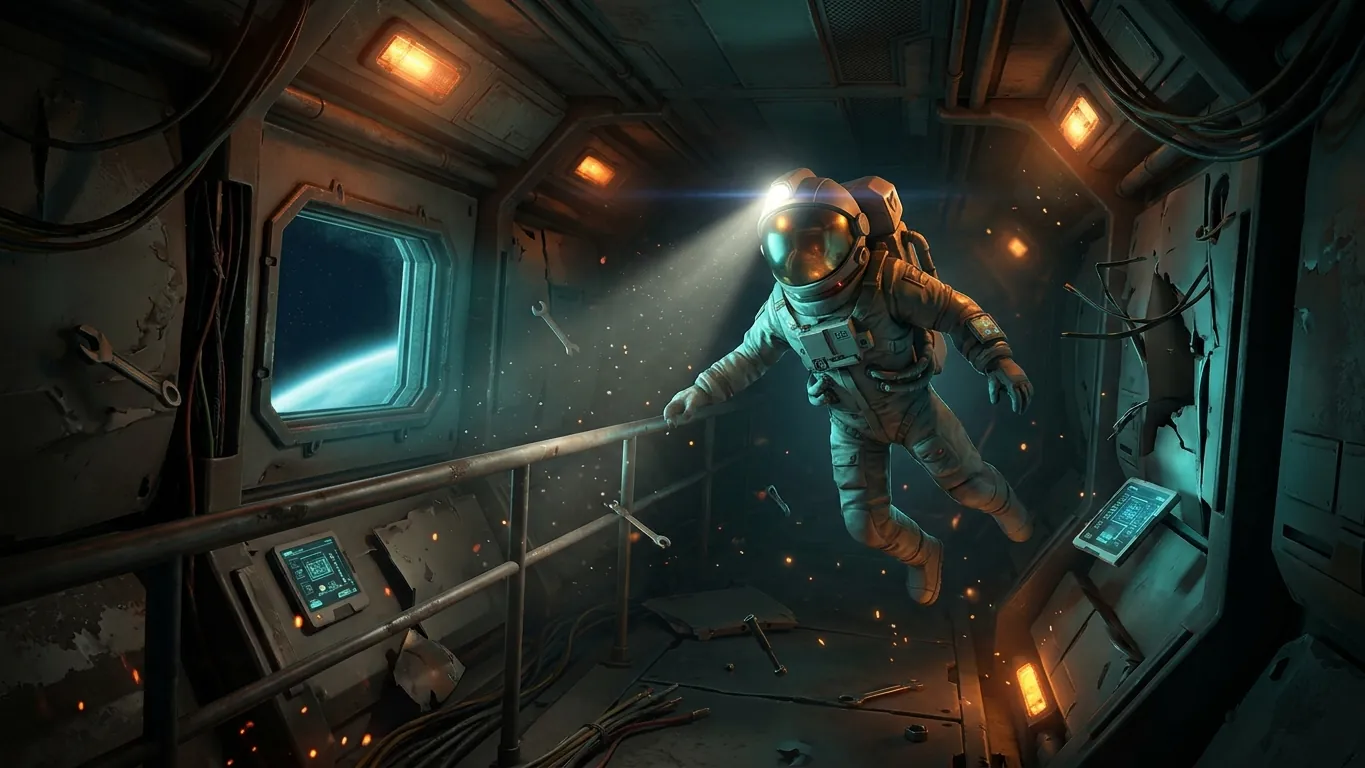
Movement without gravity takes practice. Many games let you push off walls, use handrails or fire small suit thrusters. The same advice from docking applies here: slow and deliberate beats fast and frantic.
Aim before you push off. Once you're drifting, changing direction can be hard. Grab handholds at junctions to stop yourself, and watch for floating debris that can bump you off course. Keep your tether or safety line in mind if your game uses one, and avoid wrapping it around equipment.
With a bit of practice, moving through a derelict becomes calm and almost meditative. It's one of the quieter pleasures of orbital rescue games, so give yourself time to enjoy it.
Related articles
 Setting priorities when evacuating a stranded crew
Strategy ideas for evacuating stranded crews in orbital rescue games: early triage, a simple routine, handling capacity limits and learning from failures.
Read more
 Why orbital rescue games deserve more attention
An opinion piece on why orbital rescue games stand out: care instead of conquest, tension without enemies and physics that quietly teaches you.
Read more
 Orbital rescue games: a beginner's overview
New to orbital rescue games? Learn what makes these missions unique, the pressures you'll face and the core skills that carry across many games.
Read more